
Watch a tradesman wrestling with a tap that just won’t turn, and you can’t help but wonder if there’s a jet washer that doesn’t need to rely on one. It’s no surprise that plenty of Melburnians, whether at home or on a worksite, are after pressure washers that don’t need a mains supply or a fixed water inlet – all too often, you’re left with a water tank, a garden bucket, a water butt, or just a neighbour’s domestic garden hose that’s barely trickling along.
Sometimes you’re left with nothing but a water tank, a garden bucket, or a water butt – or if you’re lucky, a neighbour with a working garden hose. So let’s break down every realistic option – the good, the bad, and the “don’t even think about that unless you really want to risk pump cavitation”.
Contents
- 1 How High-Pressure Cleaners Run Without a Standard Tap
- 2 Why Tap-Free High-Pressure Cleaners Matter
- 3 Tap-Free Cleaning Systems (Comparison Table)
- 4 How Much Water Do Tap-Free Systems Use?
- 5 Avoid Pump Cavitation
- 6 Choosing the Right Tap-Free Cleaning Unit
- 7 Safety Tips
- 8 When To Call A Professional
- 9 Real-World Situations Where We Use Tap-Free Machines
- 10 FAQ
How High-Pressure Cleaners Run Without a Standard Tap
Not all pressure washers need to be tied to an outside tap or a tap connector. Some units can draw water from anywhere, others run on Li-ion batteries and are completely cordless, and some rely on a self-priming function to suck water through a suction hose or non-return valve.
Battery-Powered Pressure Washers
These aren’t as powerful as those big petrol pressure washers or electric pressure washers, but they’re perfect for when:
- You can’t even get to a garden tap or water hose
- You’re stuck with a bucket, water butt, or rainwater tank and not much else
- You’re just cleaning bikes, camping gear, or doing some light balcony cleaning
They run on brushless motors, take a slot-in battery pack, and produce a gentle but steady water flow with a bunch of different spray patterns or angles to choose from.
Electric Pressure Washers with Suction Hoses
These can actually do without a hose connector or mains power tap when using their self-priming function. They can pull water from pretty much anywhere:
- Buckets
- Rainwater tanks
- Portable water containers
- Even a collapsible tank if you need to
This makes them great for patio cleaning, car washing, and light pressure washing jobs.
Mobile Pressure Washers (Tank-Based Units)
These are the “worksites pressure washers” – big units that you load up in the ute. They come with:
- A built-in water tank to keep things running all day
- A high rated pressure to get the job done
- A reliable water filter to keep the system clean
- A proper shut-off valve so you can turn the thing off when you’re done
These are perfect for worksites where there’s no mains supply to speak of.
Why Tap-Free High-Pressure Cleaners Matter
Melbourne’s housing mix is an absolute mess – it’s no wonder many homeowners and renters can’t rely on a fixed water supply, like a standard outdoor tap.
Unit Living & Apartments
Most balconies have:
- No outdoor plumbing
- No water inlet
- No legal way to install new water pipes
So a battery-powered power washer paired with a bucket is your best bet.
Tradies & Mobile Workers
If you’re pressure washing paving at a new build with no plumbing installed, your only option is a mobile pressure washer with its own water tank.
Water Restrictions & Water Usage Efficiency
During the hot summers or local restrictions, using tanks, buckets, or low-flow systems helps reduce water usage and keeps the council off your back.
Tap-Free Cleaning Systems (Comparison Table)
| Type | Needs Tap? | Water Source | Flow Rate | Best Use |
| Battery-Powered Washer | ❌ | Bucket, tank, water butt | Low (1–2 L/min) | Balconies, light rinsing, camping |
| Electric Washer + Suction Hose | ❌ | Bucket, rainwater tank | Medium (5–8 L/min) | Patio cleaning, small outdoor jobs |
| Petrol Washer + Onboard Tank | ❌ | Built-in tank | High (10–15 L/min) | Larger jobs without a water supply |
| Mobile Pressure Washer Unit | ❌ | Large onboard tank | Very High | Commercial cleaning, remote jobs |
| Standard Electric Pressure Washer | ✔️ | Garden tap / kitchen tap via universal tap connector | Medium–High | Regular home use with plumbing |
How Much Water Do Tap-Free Systems Use?
Battery-powered units drink water unlike bigger pressure washers, so they are perfect for when you’re using buckets or tanks instead of an outside tap.
- Battery Powered: 1–2 litres/min — very water efficient
- Electric With Suction Hose: 5–8 litres/min
- Petrol & High-Output: high pressure, high water use
Avoid Pump Cavitation
If you feed a pressure washer with too little flow, the pump sucks air and damages seals. Always ensure:
- Water source above pump height
- Filters are clean
- Non-return valves aren’t blocked
Choosing the Right Tap-Free Cleaning Unit
Start by deciding how much water pressure you really need — there’s no point lugging a petrol unit and a full water tank to clean a couple of plant pots on a balcony.
1. Water Source
Suitable sources are: buckets, rainwater tanks, portable tanks, water butts.
2. Water Pressure & Flow Rate
Low flow = gentle cleaning, higher flow = better for pavements.
3. Power Type
Battery powered = portable, electric = mid-pressure, petrol = high-pressure.
4. Connector Compatibility
If you do have a tap, but it’s not standard, get a universal tap connector or aerator attachment.
5. Water Usage Efficiency
Tap-free systems often: use less water, let you control flow, prevent waste.
Safety Tips
- Keep your water filter clean
- Don’t let the pump run dry
- Avoid using hot water from kitchen taps
- Avoid low-flow hoses
- Keep extension cords away from buckets
When To Call A Professional
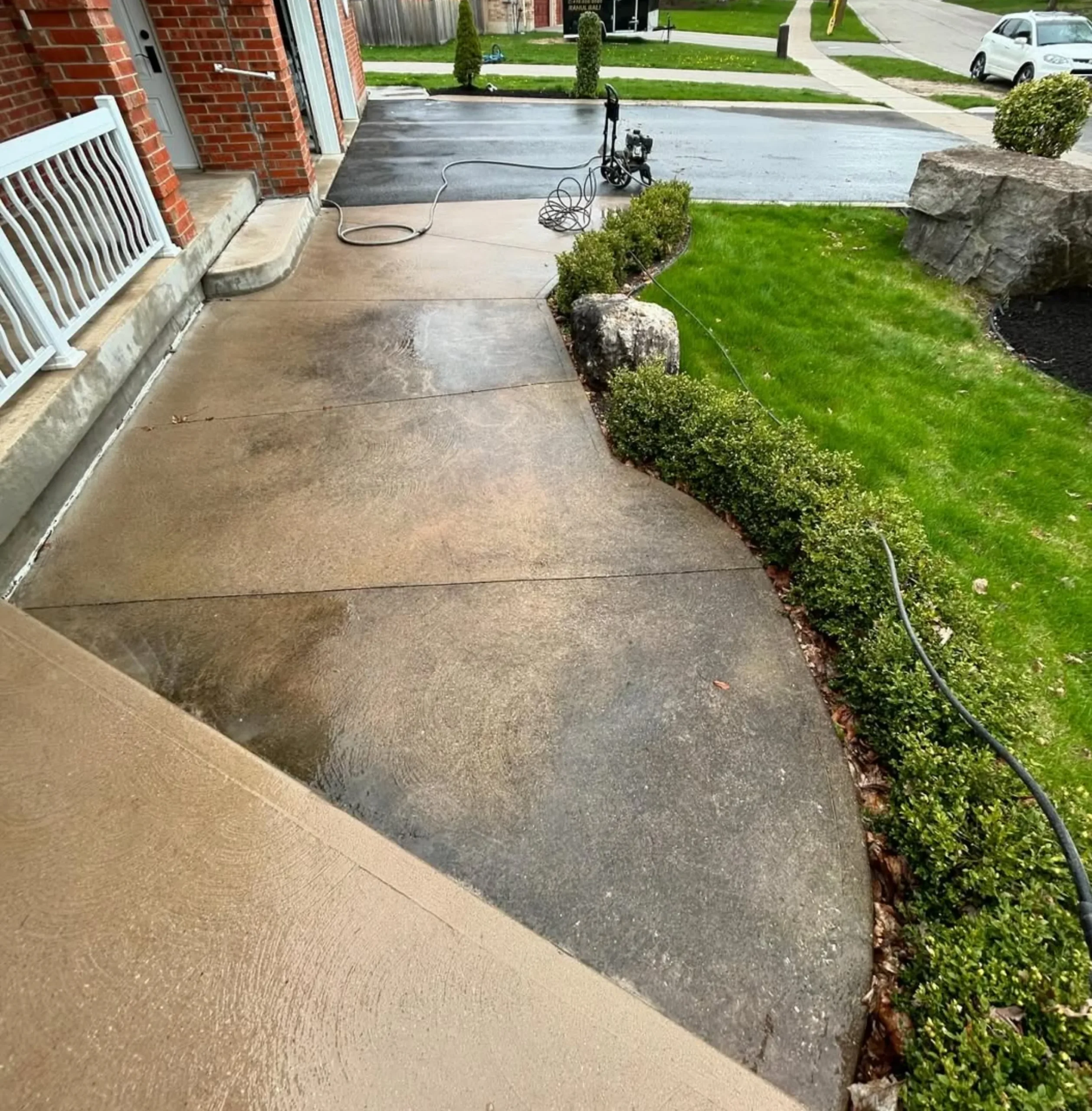
Some surfaces are just too tough for those little portable units we use for tap-free cleaning, so it’s time to call in the experts when:
- You’re dealing with heavy-duty pressure washing for paving
- You’re trying to get rid of old grime that won’t budge
- You’ve got stubborn red dust stains that just won’t shift
- Or if you think high-pressure cleaning could end up damaging the render
At Window Cleaning Melbourne Crew, we often team up a cordless unit with a portable pressure washer water tank to make short work of sites where the tap situation is dodgy at best.
Real-World Situations Where We Use Tap-Free Machines
Fitzroy Balcony Clean
No garden hose in sight, no tap connector to worry about, and no water pipe to contend with outside
Solution: Just use a cordless power washer, a bucket, and a yellow valve hose end to control the flow.
Point Cook New Build
No mains water to speak of yet
Solution: just use a mobile pressure washer with an onboard tank
Camping Near Warburton
Client – a 4WD owner – wanted to give their vehicle a good rinse without needing to connect to the mains supply
Solution: we fitted a suction hose into a 20L water butt
FAQ
Can pressure washers actually run from a bucket or tank?
Yes — lots of them have a self-priming function so you can use a bucket, tank or water butt.
Do I need to have a garden hose or outside tap handy?
No — with tap-free washers, you use a suction hose instead of a direct feed to the tap.
Can I attach a hose to a kitchen tap?
Yes, provided you’ve got the right adapter — a universal tap connector or aerator adaptor. Just check the local water regulations first.
Are battery-powered washers strong enough for the job?
They’re great for light work, but not suitable for bigger tasks like patio cleaning or large areas.
Will a tap-free washer save me any water?
Absolutely — many low-flow systems significantly improve water-use efficiency.